
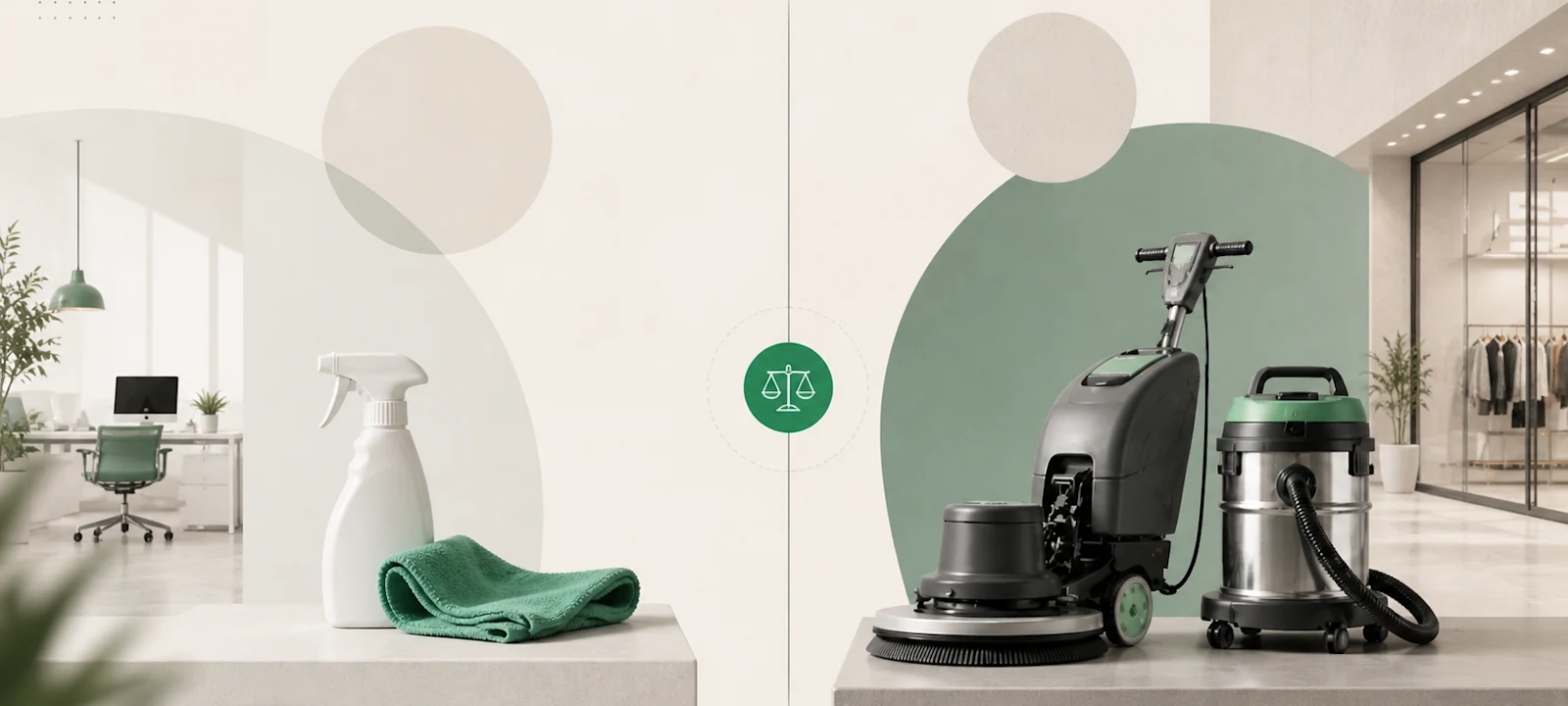
Commercial Cleaning vs. Janitorial Services for Offices, Retail Spaces, and Mixed-Use Buildings
A practical guide to choosing the right mix of daily janitorial service, periodic commercial cleaning, and project work for busy facilities.
May 4, 2026 • Cleandeck
People often use commercial cleaning and janitorial services as if they mean the same thing. In day-to-day building operations, the difference matters because each one solves a different kind of problem. Janitorial service keeps a facility usable, presentable, stocked, and safe through routine visits. Commercial cleaning usually refers to deeper, more specialized, or less frequent work that restores surfaces, handles detail cleaning, or prepares a space for a specific event.
For an office, janitorial service may include washrooms, waste removal, break rooms, touchpoint cleaning, boardrooms, entry glass, and light floor care. Commercial cleaning may include carpet extraction, machine floor scrubbing, high dusting, post-renovation cleanup, or a full seasonal reset. A healthy cleaning program usually includes both, with the daily or recurring janitorial plan carrying the basics and project cleaning scheduled around wear, traffic, and business cycles.
How the work differs in practice
Janitorial service is recurring. It usually happens daily, several times per week, weekly, or on a fixed route schedule.
Commercial cleaning is often periodic or project-based. It may happen monthly, quarterly, after construction, before occupancy, or after a major event.
Janitorial service focuses on continuity. The goal is to keep the space ready for staff, customers, tenants, and visitors every day.
Commercial cleaning focuses on restoration and detail. The goal is to address buildup, neglected areas, or specialized tasks that routine visits cannot fully cover.
Janitorial teams usually follow a scope of work. Commercial cleaning projects often need a walkthrough, photos, surface notes, and a defined completion standard.
Offices need consistency and discretion
Office cleaning is shaped by occupancy, meeting schedules, hybrid work patterns, and employee expectations. A recurring janitorial plan should protect the spaces people use every day: washrooms, kitchens, lunchrooms, desks where allowed, meeting rooms, reception, and shared touchpoints. The work needs to be consistent, but it also needs to respect privacy, confidential materials, and the natural rhythm of the workplace.
For offices, project-based commercial cleaning is useful when the space starts to show wear that routine service cannot hide. Carpets may need extraction after winter salt, fabric chairs may need spot treatment, vents may need dusting, and floors may need a machine scrub to remove dull traffic lanes. These projects are easiest to manage when they are planned before the issue becomes obvious to staff or clients.
Retail spaces depend on first impressions
Retail cleaning is unusually visible. Customers notice the entry, glass, checkout area, fitting rooms, shelves, floors, and washrooms quickly. A small miss can shape how people feel about the store before they speak with anyone. Janitorial service should focus on presentation during operating days, especially entry zones, debris removal, dust control, and washroom checks.
Commercial cleaning becomes important when retail surfaces need a deeper reset. Floors may need burnishing, tile may need detailed edge work, stockroom dust may need control, and front glass may need more frequent attention during weather changes. The best retail cleaning plans account for sales peaks, delivery schedules, and seasonal displays so cleaning does not interfere with revenue activity.
Mixed-use buildings need clear boundaries
Mixed-use buildings are harder to manage because different areas have different expectations. A lobby may need the finish of a commercial office. Residential hallways may need steady common-area cleaning. Retail tenants may have their own requirements. Waste rooms, loading areas, elevators, stairwells, and exterior entrances can become shared responsibility zones if the scope is vague.
For mixed-use properties, the cleaning plan should separate base building service from tenant-specific work. It should identify who cleans each entrance, who handles elevator touchpoints, how waste areas are maintained, and what happens after move-ins, deliveries, or tenant improvements. When those details are clear, cleaning stops becoming a recurring argument between property management, tenants, and vendors.
How to choose the right service mix
Start with the spaces that must be clean every operating day, then build the janitorial schedule around those areas.
Identify surfaces that degrade slowly, such as floors, carpets, vents, high ledges, baseboards, and upholstery.
Schedule deeper commercial cleaning before predictable pressure points such as winter, holidays, inspections, tenant turnover, and major events.
Use a walkthrough to define standards visually, especially for floors, washrooms, waste areas, and entrances.
Review the scope after the first month because real traffic patterns often reveal gaps that the first estimate missed.
A good provider should be able to explain which tasks belong in recurring janitorial service and which tasks should be treated as periodic commercial cleaning. That distinction helps control cost, reduce missed work, and keep expectations realistic. Cleandeck builds cleaning plans around how the facility is actually used, then adjusts the schedule as traffic, tenants, and operating needs change.
Related resources
Commercial cleaning prices depend on more than square footage. Learn how scope, frequency, traffic, risk, access, and supplies affect the final quote.
Post-construction cleaning works best when rough clean, final clean, and touch-up clean are planned as separate phases with different goals.
A clear janitorial scope turns expectations into repeatable work, making it easier to train cleaners, inspect results, and prevent small misses from becoming complaints.